How Will the 120 Days Be Counted?
Nobody has said yet. Here's how the 88 days are counted today, why 120 isn't just "four months", and what we'd do while we wait for the rules.
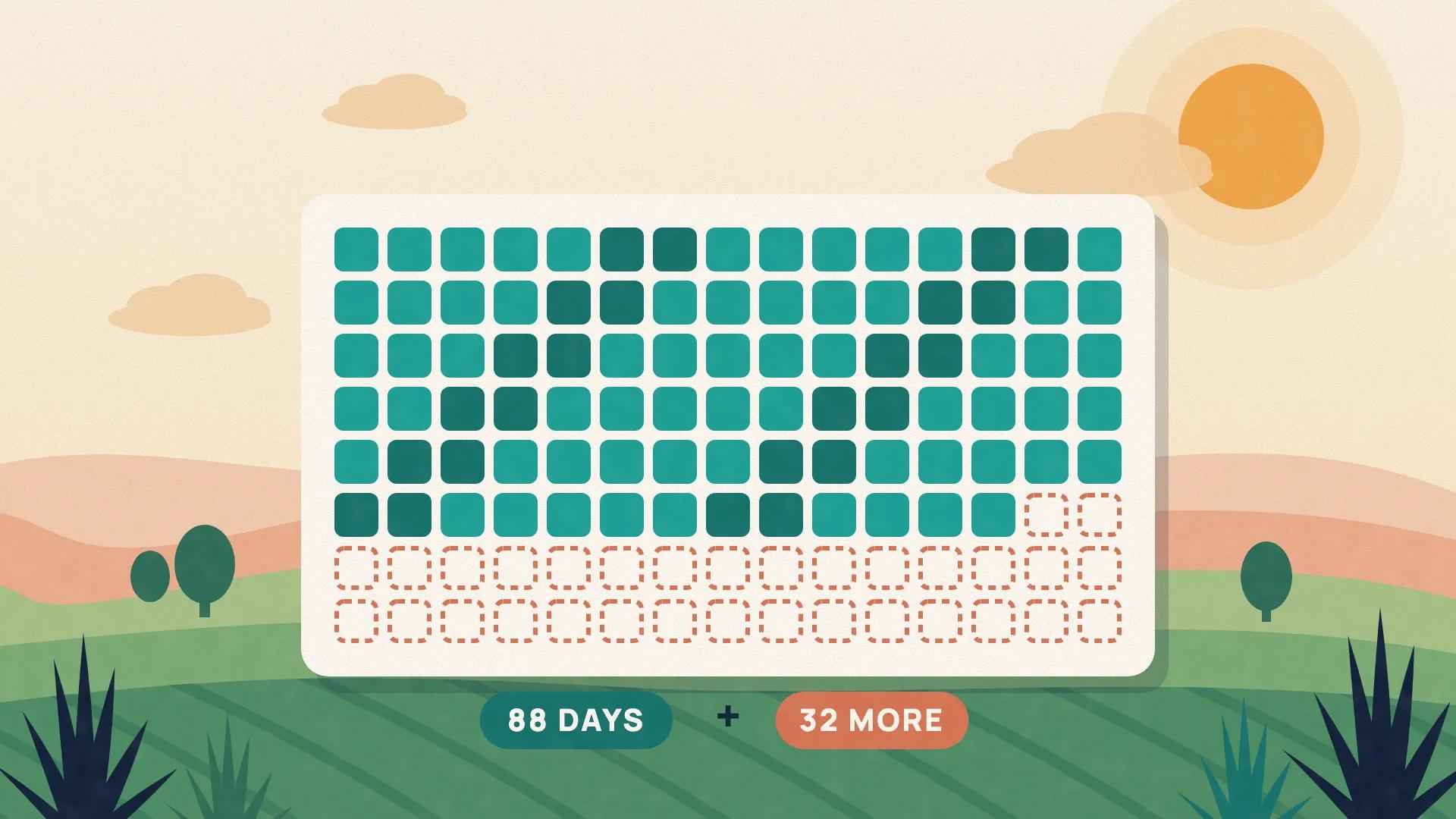
Nobody has said yet. The government has published the number, 120, and nothing about how it’s counted. We’ve spent years working out how Immigration turns hours and shifts into the 88 days, so we know how much the detail matters. Here’s what’s confirmed about counting today, where the new number doesn’t fit the old formula, and what we’d do in the meantime.
What’s confirmed about counting today
The rules for 88 days are on the department’s specified work page, and they apply to both the 417 and the 462.
- Three months “is taken to mean a period equivalent to the 3 shortest ‘calendar’ months of the year, that is, a minimum period of 88 calendar days, including weekends or equivalent rest days during your period of employment.”
- You need “the same number of normal work days or shifts as a full-time employee in that role and industry would normally work” in that period.
- “You cannot complete the specified work requirement in a total period shorter than 3 or 6 calendar months.”
- One calendar day is one day, however long you work. A ten-hour day where five is normal “does not count as 2 days”.
- Public holidays and sick days count only “if you are paid for that day”.
- Unpaid days lost to weather don’t count.
Our long guide to how Immigration calculates your days goes through each of these with examples.
Why 120 isn’t simply “four months”
The Minister’s media release describes the change as going “from three months to four months”. The department’s page says “from 88 days to 120 days”. Those aren’t quite the same thing, and here’s why we noticed.
The 88 isn’t a round number someone liked. It’s the three shortest months added together: February’s 28 days, plus two 30-day months. The six months for a third year works the same way and comes to 179.
Run that formula for four months and you get 28 + 30 + 30 + 30, which is 118. Not 120.
So 120 is a new number that doesn’t come from the old formula. That could mean nothing. Or it could mean the counting rules get rewritten along with the number. We don’t know, and we’d rather tell you that than pretend.
We don’t know, and we’d rather tell you that than pretend.
For what it’s worth, the department’s page already has an example that lines up with the new number. Karla works five days a week from 1 January to 30 April, and the department says this “counts as 4 calendar months (in this case 120 calendar days)”.
Our best guess
We think 120 days will be counted the way 88 is now: 120 calendar days of full-time work, with weekends and paid days off included, and no way of finishing faster. On a five-day week that would be around 86 working days. The Department of Home Affairs hasn’t confirmed any of this.
We think that because the Minister said the work is “the same as what you’re already doing; there’s just an extra month”, and because rewriting the counting method would be a much bigger change than anyone has announced.
If we’re right, the practical version is simple: whatever you’d do to reach 88, keep doing it for about four and a half more weeks.
What we’d do while we wait
- Count the way you count now. The days you’ve done count towards the new requirement. The department says “Eligible specified work completed before this date continues to count”.
- If you can lodge by 28 February, 88 is still your number. Check your date.
- If you can’t, don’t stop at 88. Treat 120 as the target and keep working.
- Keep everything. Payslips, rosters, your piecework agreement if you have one, and your own diary of the days you worked. If the rules do shift, records are what protect you.
Our calculator counts to 88 today. Use it to keep track of the days you have. A 120-day mode is on the way, and it’ll guide you to the new number the way it has guided backpackers to 88 for the last seven years.
When will we know?
The new requirement starts on 1 March 2027, so we’d expect the rules before then. The department has said it will publish registration details before 1 December 2026, and that may come with more. We’ll update this page the day the counting rules appear.
Quick answers
- How are the 120 days counted for a second year visa?
- The Department of Home Affairs has not published counting rules for the 120 days. The requirement is due to start on 1 March 2027.
- Is 120 days the same as four months?
- The Minister described the change as going from three months to four months. Under the department’s current formula, which uses the shortest calendar months, four months would be 118 days, so 120 is a new figure.
- Do the days I have already done count towards the 120?
- Yes. The department says eligible specified work completed before 1 March 2027 continues to count towards the new requirement.
- How many working days is 120 days?
- If it is counted the way 88 days is now, 120 calendar days of full-time work on a five-day week is around 86 working days. That is our estimate, not a published figure.
- Do weekends count?
- Under today’s rules, weekends count when you work the normal full-time week for your job. Whether that carries over to the 120 days has not been confirmed.
- Is there a 120 days calculator?
- Not yet. The 88th Day’s calculator counts to 88 days today, and a 120-day mode is on the way.
What’s changed on this page
- 18 November 2026: first published.
Sources we checked
- Department of Home AffairsWorking Holiday Maker visa application rules are changingPublished
- Minister for Home AffairsA fairer and more sustainable Working Holiday Maker programPublished
- Department of Home AffairsSpecified work for Working Holiday visa (subclass 417)Updated
- Department of Home AffairsUpcoming changes to Working Holiday Maker visa application rulesPublished
Ready to start your journey?
Use the tools and guides built by backpackers who did their own specified work in Australia.